PORSCHE 911 GT3 (991): BREMBO 2-PIECE TYPE III DISCS

PORSCHE 911 GT3 (991): BREMBO 2-PIECE TYPE III DISCS

Porsche’s 911 GT3 (991) is a demanding platform on the OE brake package with unique demands (475 horsepower, over 3200 lbs curb weight, and multiple electronic braking / traction aids). The Brembo OE brakes equipped on the Porsche 911 GT3 & Turbo models are some of the most sophisticated designed for an OE application. The Porsche Brembo OE brakes utilize 6-piston aluminum fixed monobloc calipers front and 4-piston aluminum fixed monobloc calipers rear. The brake discs are heavy duty 380 x 34 mm ventilated front & 380 x 30 mm rear brake discs. The Porsche 911 GT3 brakes use a wide annulus (radial depth) front and rear pad for maximum swept area. The OE pads are also 18 mm thick front and rear which is comparable to most high performance aftermarket calipers.

Generally speaking about later model 911 platforms: The GT3 has always been more demanding on the rear brakes due to aggressive rear brake balance while the Turbo models are generally more demanding on the front brakes. While the OEM specification Porsche brakes all look similar, the caliper piston sizes, hydraulic systems and car balance can be considerably different.

There are certain limitations with the OE components on any high performance application as they are designed specifically for the car manufacturers to their requirements of comfort, wear rates in various road environments, cost and serviceability.

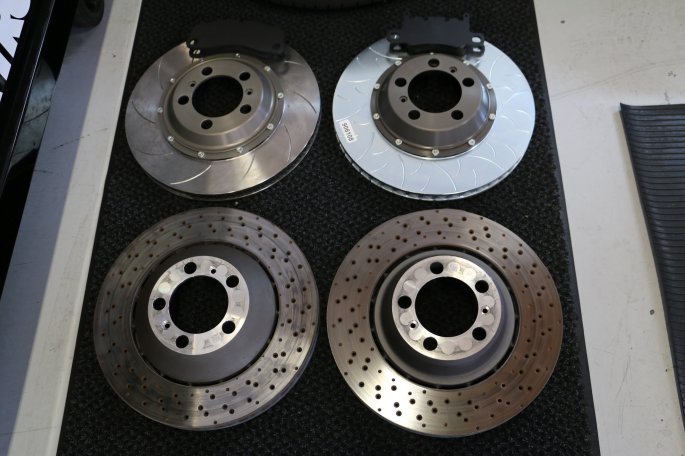
As the braking system’s primary function is to dissipate heat, Brembo uses purpose-designed discs in order to increase the fade resistance and thermal capacity of the system. These discs are directionally ventilated for enhanced cooling and slotted for better performance and continuously refreshing the pad surface. Brembo 2-piece discs are made up of a proprietary advanced cast-iron alloy which offers an exceptional coefficient of friction and resistance to thermal shock and fatigue.

The same Brembo Racing discs trusted every weekend in professional motorsports are also utilized in the Brembo Performance Program (GT, GT-R & Race Systems).

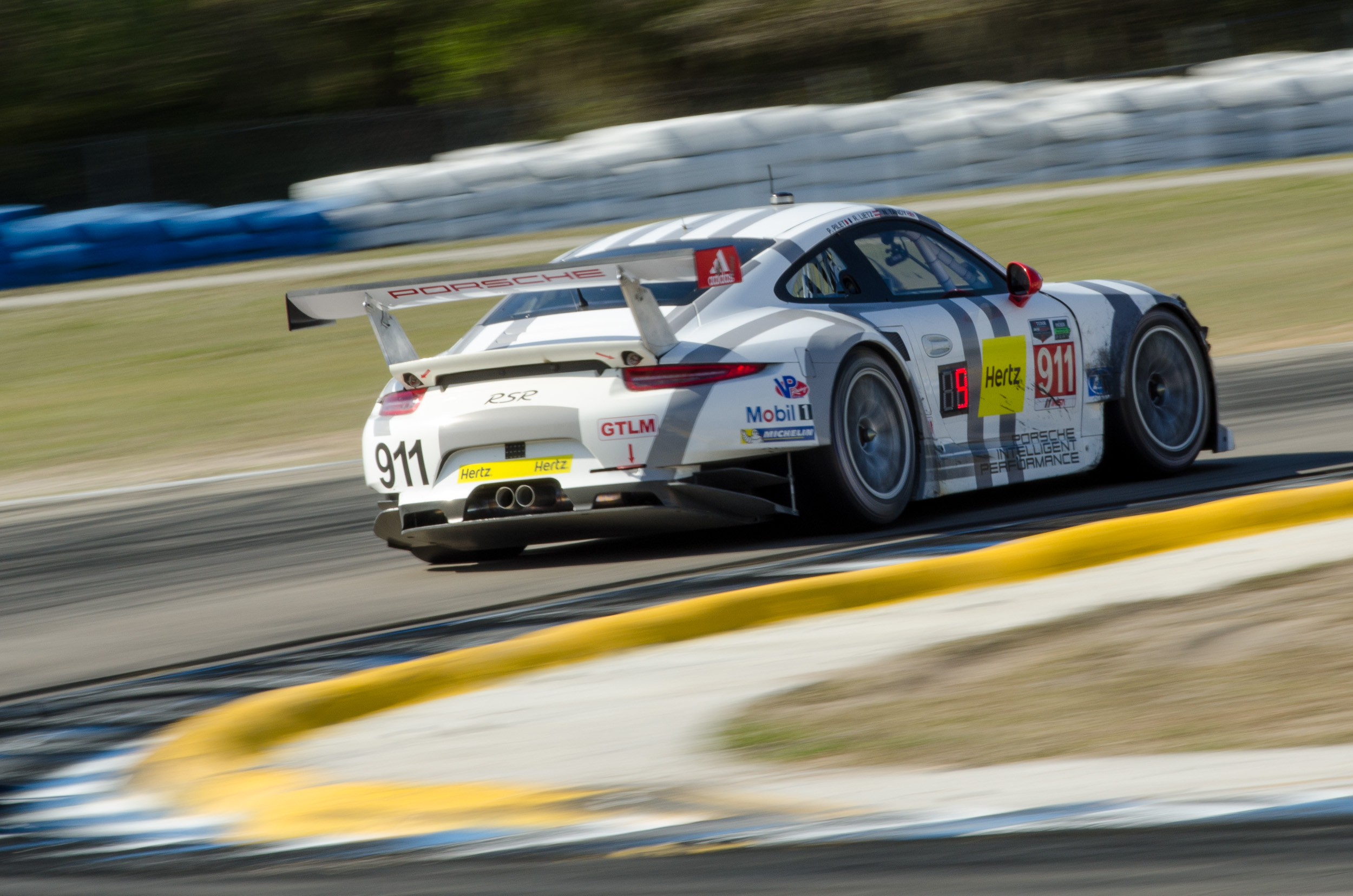
GMG 991 GT3 with Brembo Type III 2 piece discs. Photo Credit : GMG Racing

GMG 991 GT3 with Brembo Type III 2 piece discs. Photo Credit : GMG Racing


BENEFITS OF BREMBO 2-PIECE DISC UPGRADES:

  • OEM INTEGRATION: Brembo 2-piece disc upgrades are designed to work seamlessly with the OE calipers and systems (manufactured by Brembo for Porsche). This guarantees the utmost in safety and seamless fitment.
  • LIGHTWEIGHT: Disc assemblies include an outer iron disc with aluminum bell/hat and provide decreased corner weights to improve vehicle dynamics including handling, acceleration, and braking.
  • TYPE III SLOT PATTERN: Extensively used in professional motorsports, the Type III slot pattern offers a high initial response with excellent release characteristics.
  • HIGH THERMAL CAPACITY: Greatly improved thermal capacity and heat management over OE discs and other aftermarket discs in the market. This also improves braking performance and allows for greater longevity of the components.
  • FRICTION MATERIALS: Everything we learn by supporting top professional racing teams throughout the world goes into selecting the best brake pad options for all levels of street, track and racing use.

PACKAGES INCLUDE:

  1. Outer Brembo Type III discs (qty 2)
  2. 6061 T6 aluminum (machined from billet), hard anodized bell/hat
  3. Complete Brembo disc hardware (D-type bobbin) w/ anti-rattle springs. (Full Floating Option Available Upon Request
GMG Racing 991 GT3 Equipped with Brembo Racing discs. Photo Credit: GMG Racing

GMG Racing 991 GT3 Equipped with Brembo Racing discs. Photo Credit: GMG Racing

BREMBO 911 GT3 (991) 2-PIECE DISC OPTIONS:

FRONT BREMBO 2-PIECE DISC OPTIONS: 911 GT3 OE IRON EQUIPPED

MSRP COMPLETE AXLE SET: $1,895.00
911 GT3 Front disc specifications:

–          380 x 34 disc – Lightweight
–          Type III slot type
–          20 mm air-gap (wide air-gap for overall brake disc weight reduction)
–          72 vane ventilation
–          21 lbs – disc ring
–          23 lbs – complete 2-piece disc assembly
–          Compatible with 911 Turbo (991) Models

911 GT3 Front “High Thermal” disc specifications:

–          380 x 34 disc – High Thermal
–          Type III or Type V “Endurance” slot type available.
–          17 mm air-gap (narrow air-gap for the brake disc to have extra thermal capacity and durability under higher brake demand conditions)
–          72 vane ventilation
–          23 lbs – disc ring
–          24.5 lbs – complete 2-piece disc assembly
–          Compatible with 911 Turbo (991) Models

REAR BREMBO 2-PIECE DISC OPTIONS: 911 GT3 OE IRON EQUIPPED

MSRP COMPLETE AXLE SET: $1,895.00

911 GT3 Rear “High Thermal” disc specifications:

–          380 x 30 disc – High Thermal
–          Type III slot type
–          16 mm air-gap
–          48 vane ventilation
–          20 lbs – disc ring.
–          22 lbs – complete 2-piece disc assembly
–          Compatible with factory braking brake (e-brake)
–          Compatible with 911 Turbo (991) Models

PORSCHE 911 GT3 (991) OEM DISC WEIGHTS – FOR REFERENCE:

– Front, 380 x 34: 24 lbs
– Rear, 380 x 30: 23.4 lbs

PORSCHE 911 Turbo (991) OEM DISC WEIGHTS – FOR REFERENCE:

– Front, 380 x 34: 27.8 lbs
– Rear, 380 x 30: 24 lbs
17552403033_a0487ef833_k(1)

2015 BREMBO RACING AND PORSCHE MOTORSPORTS INVOLVEMENT:

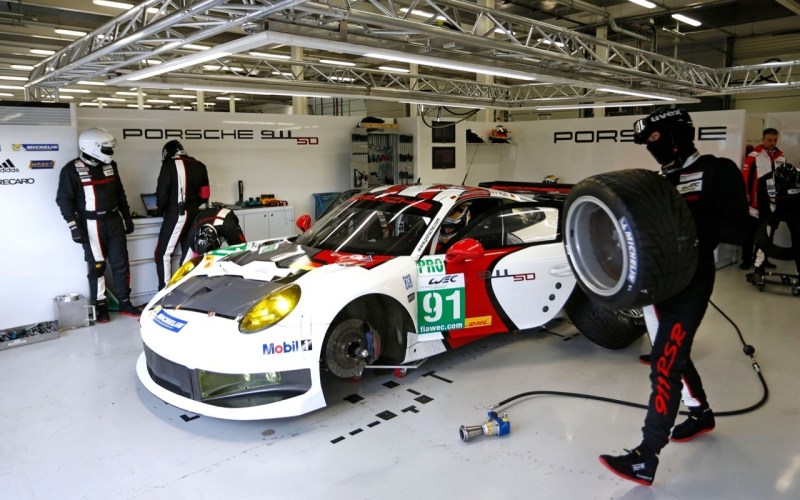
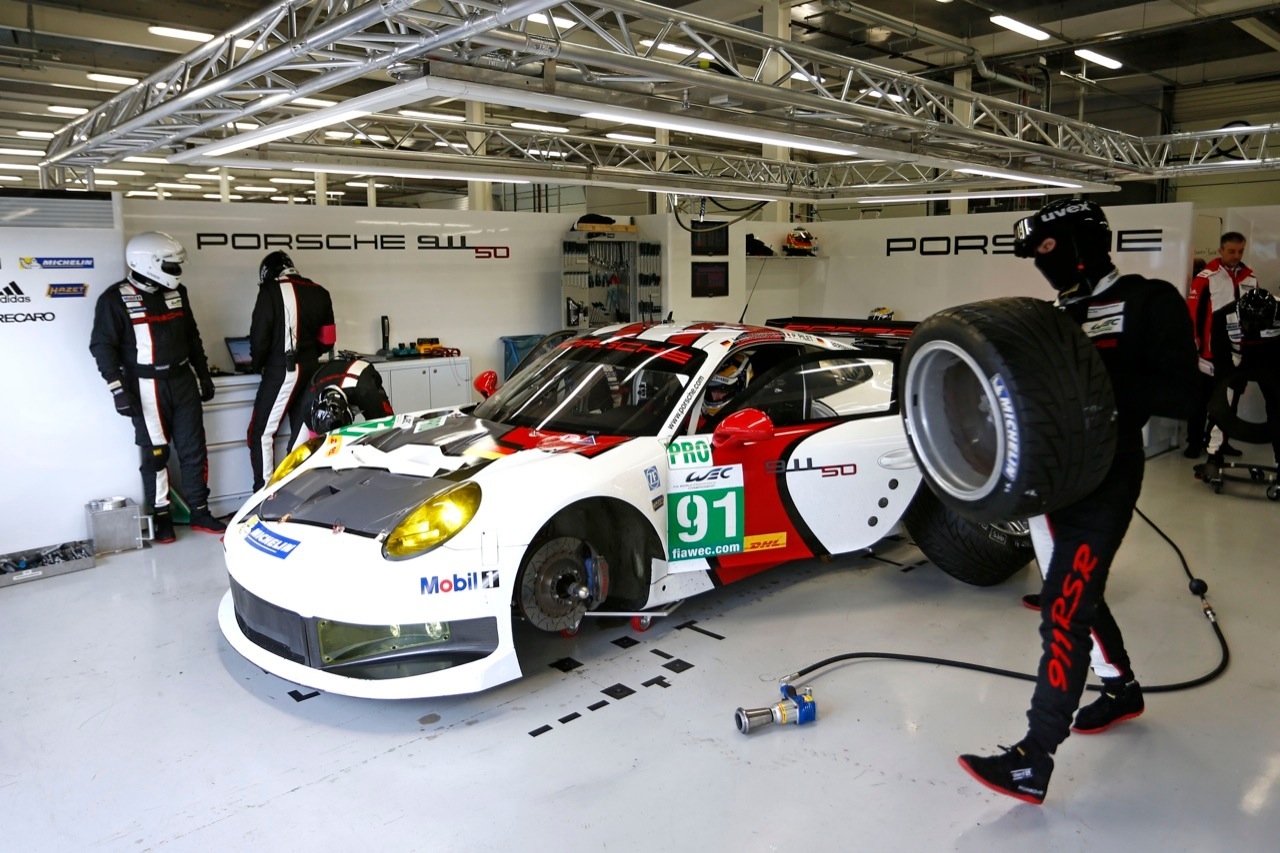
Brembo Racing works very closely with Porsche Motorsport as a technical partner on multiple factory motorsport programs. Some of these include, but are not limited to, the 2015 spec Porsche 919 Le Mans Prototype program for the LMP class and the 911 (991) RSR for the GT Class. The 919 Hybrid is Porsche Motorsport’s latest fully factory supported effort since 2014 and features various cutting edge technologies which will eventually be carried through to road going vehicles.

LMP Class:

For 2015, to be competitive in the top prototype class, the Porsche 919 Hybrid has been re-engineered from the ground up. One of the many key changes is a Brembo Racing carbon brake package to maximize braking performance and reliability since the new 2015 model has an upgraded chassis, aerodynamics and has more power compared to 2014.

Brembo Racing Porsche 919 brake package:

Brake Calipers: Brembo Racing motorsport calipers.
Brake Discs: Brembo Racing carbon-carbon brake discs.

2015 Porsche 919 Hybrid LMP1 Car. Photo Credit: Porsche AG

2015 Porsche 919 Hybrid LMP1 Car. Photo Credit: Porsche AG

GT Class:

Porsche’s 911 (991) RSR is built to compete at the 24 hours of Le Mans and is the most sophisticated GT racing sports-car offered by Porsche Motorsport unlike the Cup Cars designed generally for customer / private teams. The 991 RSR is also specified with a Brembo Racing cast iron brake package. Teams can choose disc and pad configurations based on their individual car balance, setup, circuit and brake demand.

Brembo Racing Porsche 991 RSR brake package:

Brake Calipers: Brembo Racing motorsport calipers (6 piston – front, 4 piston – rear)
Brake Discs: Brembo Racing 380 mm and 355 mm cast iron brake discs.

Brembo is the OE brake supplier to Porsche, offering Performance upgrades for the various 991 platforms (Carrera S, GT3, Turbo models) using similar components and technology developed for professional motorsport.

MOTORSPORTS IMAGERY
Photo Credits: James Boone, Porsche Motorsport

12163389896_a398592058_o

13301464114_c1c679464c_o

Porsche-911-RSR-Racing-02

Brembo (General News) Brembo Performance Brembo Racing

The Advantages of Cross Drilled and Slotted Discs

This article was originally posted by Modified Magazine. Click here to read it.

We’ve received quite a few emails lately asking us to explain what the advantages are of cross-drilled and slotted rotors, as compared to the blank rotors most cars come standard with. We’ve also had requests to explain why many slotted rotors these days have curved or J-hook shaped slots, rather than straight slots. Rather than giving you the Wikipedia answer, we went right to the source by once again contacting Mark Valskis at Brembo North America (some of you will recall his contribution to the big brake kit Tech Talk story in the May ’11 issue).

As most of you already know, the basic function of a brake disc is to provide a mating surface for the brake pads so that when you stomp on the brake pedal the friction material that makes up the pad is squeezed against the rotors (by the calipers), converting forward motion into heat as the car slows. That heat is then radiated to the atmosphere as air flows over and through the rotors (and the rest of the braking system), completing the conversion of kinetic energy into thermal energy.

According to Mark at Brembo, cross-drilled rotors came into being because of the need to evacuate gases or water from the interface between the disc face and the brake pad surface. As Mark further clarified, “Modern brake pads don’t have an issue with out-gassing like they did many years ago, but the cross-drilling is still helpful for use in wet conditions, especially when the pad surface area is large. Additionally, cross-drilling increases the surface area of the disc, and this aids in disc cooling (one factor in brake disc cooling is the ratio of surface area to disc mass). The most significant feature of the holes (when done correctly) is that they continually refresh the brake pad surface, providing improved performance and greater disc life. As the holes pass the brake pad they essentially clean the surface, helping to prevent pad glazing or hardening. This effect can be easily observed on a drilled disc near the outer edge where there are no holes. In this area, the pad surface is not refreshed and you will typically see greater disc wear in this unswept area.” It’s also worth noting that this type of pad refreshing by cross-drilled and/or slotted rotors helps maintain more consistent frictional performance.

Rotor Education Tech Talk Cad Drawing
These CAD drawings of a slotted and ventilated Brembo brake disc illustrate just how compl
modp-1111-03+rotor-education-tech-talk+cad-drawing

Some of you may not be fans of cross-drilled rotors because you’ve seen cracks in the disc surface radiating out from the drilled holes, but as Mark points out, not all drilled discs are created equally. “Brembo has a long list of requirements for drilled discs. First, the holes are not just simple cylindrical holes. They have a more complicated shape that requires special tools to create. We also have strict requirements on hole density or the number of holes per given surface area of the disc. Additionally, there are requirements for the hole size and placement of the holes, including distance between holes, distance from braking surface edges, distance to disc vanes, angular offset of holes and more.”

But even with the highest quality cross-drilled discs, there can be issues with thermal shock and fatigue around the holes when using very aggressive racing brake pads. As Mark explained, “Slotted discs were developed to provide the benefit of refreshing the pad surface, while being able to be used with top-level racing friction materials. Drilled discs provide the same benefit [refreshing the pads], but also increase the cooling of the brake disc. With top-level racing materials, the heat input is very rapid and the increase in localized cooling around the holes can cause issues.” So slotted rotors were developed as a solution to a very specific problem associated with extremely aggressive friction material normally associated with racing, though if you’re anything like me and run some pretty aggressive brake pads on the street as well as at the track, then slotted rotors may be the right choice for your car.

Rotor Education Tech Talk Cross Cut
These CAD drawings of a slotted and ventilated Brembo brake disc illustrate just how compl

modp-1111-04+rotor-education-tech-talk+cross-cut

As for the shape of the slots, Mark had this to say: “The different design of the slots is due to extensive research and development, including [brake] dyno testing. Due to the fact that track testing is required, and thanks to strong collaboration with many top-level racing teams, Brembo has developed a very broad knowledge of the many different types of slot shapes possible when machining discs.” Since this type of extensive R&D is really outside the scope of all but the biggest brake system manufacturers, a lot of what you’re seeing in the aftermarket are companies copying what leaders like Brembo are doing with respect to slot shape, slot spacing, slot depth and so on.

Ultimately, the slots are all designed to do the same thing (refresh the brake pads), but different shapes no doubt impact the aggressiveness with which the pads are refreshed and also likely affect localized cooling of the disc. And speaking of cooling, the internal structure of ventilated rotors plays a very important role here. “The mass of the disc is the determining factor in how much energy the disc can absorb, while the design of the internal geometry helps improve the disc’s ability to shed the heat,” Mark explains. “The key factor in the use of a vented disc versus a solid disc is the increase in the ratio of disc surface area to mass. Heat transfer to the air occurs only on the surfaces of the disc that are directly exposed to air; so the more surface area, the better the disc can shed the heat.”

Rotor Education Tech Talk Display Model
This NASCAR braking system provides some interesting insight into disc slot design – note

As for the internal vane structure of a ventilated disc, Mark adds: “There are limitless internal vane structures that are possible. Design of the vane structure has a dramatic effect on the performance of the brake disc. Some designs, such as directional curved-vane discs actually improve the airflow through the disc by turning the disc into a centrifugal pump. However, the cost of implementing this is increased due to the need for unique left- and right-hand discs. Brembo has patented a ‘pillar vane’ internal geometry that provides nearly all the airflow advantages of the curved vane discs while being able to use the same disc on both the left and right sides of the vehicle.”

Who knew so much technology goes into these seemingly simple iron discs (the material composition of brake rotors being a topic for another month). But when you consider just how vitally important the braking system is to safety and performance, it shouldn’t come as a surprise that industry leaders like Brembo are constantly looking for ways to improve the design of their brake discs.
Rotor Education Tech Talk David

Send your feedback to dpratte@modified.com

Read more: http://www.modified.com/tech/modp-1111-rotor-education-tech-talk/viewall.html#ixzz27PLW71oM

Brembo (General News) Brembo Performance

“Super Mario” from TSR Fabrication in Gardena, CA

One cool thing about working with the Brembo brand is the people that it attracts. These are the types who are drawn to having the best, and they don’t compromise on anything which also exemplifies the type of work they do. One such person is die-hard Brembo fan Mario Lozano aka “Super Mario” from TSR Fabrication in Gardena. Most know his name in the Datsun 510 community, but his personality goes beyond Datsun’s, and you can see the artistry and passion he has come through everything he builds or fabricates (Nissan, Porsche, etc). To see more of his work, click on the links below:

Here’s some articles on him:

Brembo (General News) Brembo Performance

Brembo CCM-R (Carbon Ceramic for Racing)

The Brembo CCM-R disc is a product of many years experience accumulated by Brembo in the field of carbon brake materials used in F1, combined with the expertise acquired by the company in CCM applications for road use.

The main advantages of the Brembo CCM-R disc are:
– considerable saving in weight, compared to cast iron (̴ 5kg each wheel assembly);
– high thermal conductivity;
– durability and versatility characteristic of carbon ceramic material for road use (disc life 5 times longer);
– friction 10% better than cast iron (comparison made using the same pad compound);
– operating temperature 5% lower.
Selected materials and original processes, researched and optimized to produce the Brembo CCM-R disc — and incorporating the newest technologies applied to carbon ceramic discs — have resulted in a product with superior engineering features.

CCM-R for the Nissan GT-R (R35)

Brembo Press Release (PDF): CCM-R-Disc_14-01-2010
Brembo (General News) Brembo Performance

Why aren’t seat belts connected directly to the seat?

Seat belts fixed to the seat have some advantages. However, until now, there is no specific FIA standard that regulates the construction of the seat to make it resistant to the loads transferred from the belt in an accident.

The reason why it’s connected to instead to the body, is that the roll-bar is integral to the whole body and it’s able to dissipate impact energy better with a properly designed cage. It’s also able to resist better than a threaded connection built into a body of a composite material. Additionally, until a few years ago it was much easier to simulate the dynamic behavior of metals compared to composite materials, making the predictability in the event of an impact “safer” and the level of protection more reliable.”

Brembo (General News) Sabelt

Can I use Subaru WRX STI Brembo calipers on my Subaru BRZ, Scion FR-S, or Toyota GT86?

Q: Race Technologies | Brembo Official Partner: We approached Brembo Engineering with this question “Can I use Subaru WRX STI Brembo calipers (Original Equipment) on my Subaru BRZ, Scion FR-S, or Toyota GT86?”.

A: Brembo Engineering: You cannot use 2002+ Subaru WRX STI Brembo O.E. (Original Equipment) calipers on either 2012+ Subaru BRZ, 2012+ Scion FR-S, or 2012+ Toyota GT86.

85C8C59EE2D86921E7A698FEC414A619

Subaru WRX brake system: 4-piston calipers with 1-piece 326×30 rotors. Retails for $1,795

Here’s why:

  • Subaru WRX STI calipers are made to be mounted in the trailing position (behind the axle).  If mounted in front of the axle, by exchanging positions of the plugs and bleed screws on the caliper, it is not possible to bleed all the air out of the system because the fluid crossover in the caliper is the highest point and will trap air.  This leads to poor brake performance and a poor pedal feel.  If the calipers are mounted in front of the axle by putting the left hand STI caliper on the right side of the BRZ/FRS and vice versa, then the staggered pistons are in the wrong order, which leads to rapid and significant taper wear on the pad, which causes a number of other problems with the brake system.
  • The piston sizes of the WRX STI calipers are not appropriate for the BRZ/FRS, they are too large (resulting in a 25% increase in front).  This leads to a number of non-desireable side effects, including long brake pedal travel, greatly increased front brake bias, and ABS problems.

Officially Released Brembo Performance Upgrades for the BRZ/FR-S/GT86

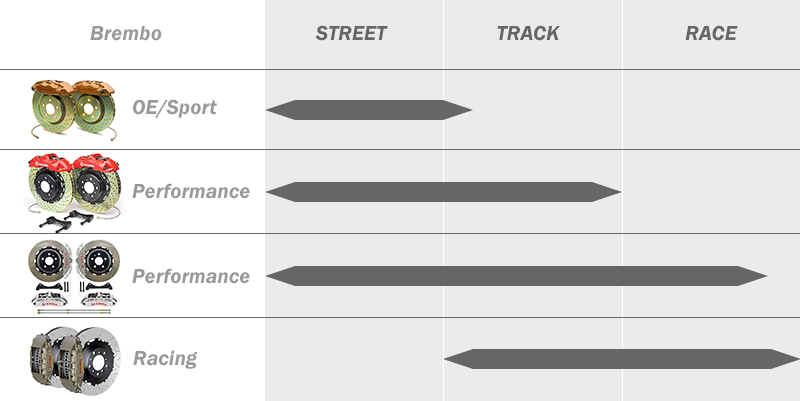
Brembo had worked directly with Subaru to develop the WRX STI brake package. This OE (Original Equipment) brake system was designed within the manufacturers specific parameters which typically isn’t necessarily meant strictly for high performance use. Instead, this system has to cater to a wide range of requirements such as price, environment (rain, snow, or shine), and NVH (Noise, Vibration, and Harshness) which are related to your average user who will drive primarily on the street vs. significant track usage.

subaru-brembo-intended-use

Beyond Brembo OE are Brembo Performance upgrades which are designed specifically for modified cars with increased horsepower, aero, increased grip, or other enhancements. For these applications Brembo offers several solutions to match your cars performance requirements (you can consider these as “stages”, i.e. “stage 1 to stage 5”) which may also further extend into the Brembo Racing program.

Below is a listing of some of the benefits of a Brembo Performance system over a Brembo OE STI brake system. These are Brembo’s official offerings for the Scion FR-S, Toyota GT86, and Subaru BRZ.

  1. Increased capacity/brake torque: increased thermal capacity and increased effective brake torque. The Brembo OE STI rotor is a 326x30mm whereas the Brembo Performance options are 332x32mm, 345x28mm, or 355x32mm.
  2. Lightweight discs: a 2-piece disc (approx 16 lbs) is substantially lighter than a 1-piece iron rotor (roughly 22 lbs).
  3. Brake tuning: varying face designs allow for fine tuning: cross drilled discs have the highest initial bite out of any slot face although a slotted design (type I) helps with refreshing the pad surface.
  4. Lightweight caliper: the opposed 4 and 6-piston (vs. just a 4-piston) calipers are designed to be as lightweight as possible while being very stiff.
  5. Overall pad thickness: Brembo OE STI calipers use a standard 15 mm pad, and Brembo Performance calipers can accept up to an 18 mm pad depending on the exact caliper. With Brembo Club Race calipers, they can accept up to a 20 mm pad which is quite significant because this not only improves overall pad wear rates, but it also helps with overall pedal consistency (pads are also a barrier against heat transfer to the pistons).
D80E9BCF67A4FB2183DA2C51CE50F8FC

Notice the disc sizes offered range from 332×32, 345×28, and a 355×32. Also all of these discs are 2-piece discs which utilize a lightweight billet aluminum hard anodized bell with outer iron disc which is substantially lighter than a 1-piece solid iron rotor.

Brembo Performance GT Systems (street and track):

  1. (F) 6-piston monoblock, 2-piece 355x32mm, $3,995
  2. (F) 4-piston monoblock, 2-piece 345x28mm, $3,595
  3. (F) 4-piston, 332×32, 2-piece $3,595
  4. (R) 4-piston, monoblock, 2-piece 345x28mm, $3,695
  5. (R) 2-piston, 1-piece 316×20, $1,795

Brembo Performance GT equipped cars:

IMG_6294

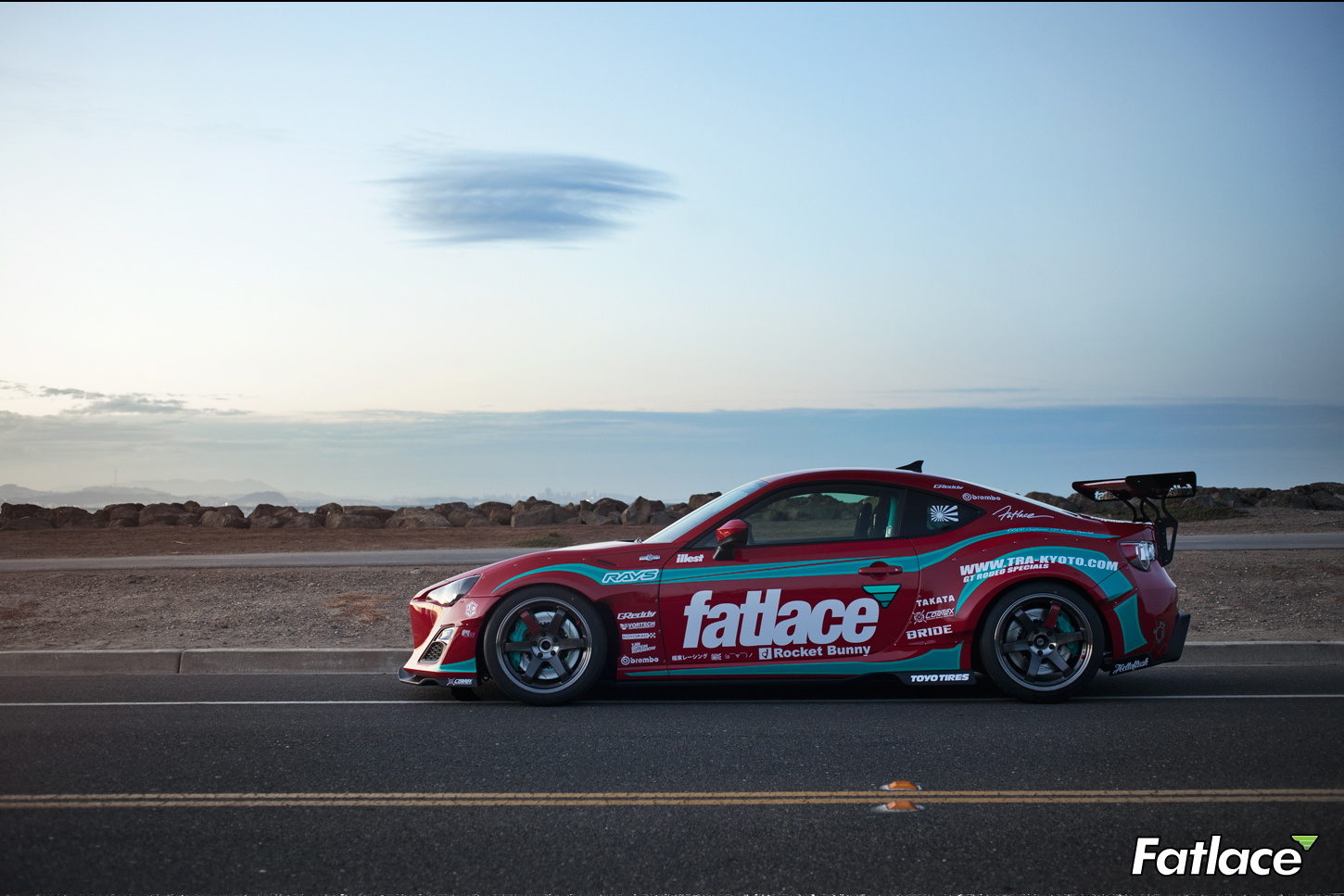
  1.  The Fatlace Scion FR-S build. Click here for the full story

28B7BAF132003BE37E7913FC34A380F3

There’s a drastic difference between a OE Brembo system which is designed within the constrictions set by the vehicle manufacturer, and a Brembo Performance GT-R system which is designed to offer the highest performance possible. One such example of that is the GT-R’s calipers are a billet CNC’d monobloc design with an extremely durable nickel plating. Additionally, this caliper is on par with a Brembo Racing component with its high thermal resistance, twin piston seals, and stainless steel ventilated piston inserts. This entire system has the broadest range of performance (street, track, and racing) than any other system offered on the market. This is the ultimate big brake system upgrade.

Brembo Performance GT-R Systems (street, track, race):

  1. (F) Billet/nickel plated 6-piston monoblock, 2-piece 355x32mm, $8,395
  2. (F) Billet/nickel plated 4-piston monoblock, 2-piece 345x28mm, $7,595
  3. (R) billet/nickel plated 4-piston, monoblock, 2-piece 345x28mm, $7,695

BREMBO-3K2-7001A

Designed specifically for track enthusiast while being a cost effective solution. This system offers several track specific features such as the calipers quick pad release, hard anodized finish, and stainless steel piston inserts for increased thermal resistance. The disc is a type III for high initial bite and quick release characteristics and a 72 vane count for high thermal capacity and heat dissipation.

Brembo Performance Race Systems (track and race):

  1. (F) Hard anodized with quick release 4-piston race caliper, 2-piece 355x32x54a, $3,895
  2. (F) Hard anodized with quick release 4-piston race caliper, 2-piece 332x32x54a, $3,895

Brembo Performance Race equipped cars:

Image00003

scion-frs-meguiars-concept

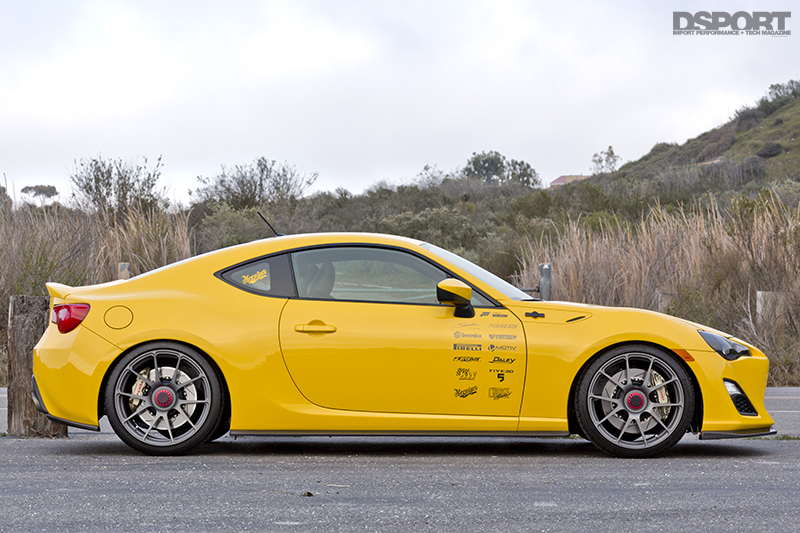
  1. The Meguiars NuR Concept Car by FRS BRZ Performance.com. Click here for the full story

No other high performance brake company can offer the expertise or range of product that Brembo offers.

You can find more information here.

Brembo (General News) Brembo Performance